

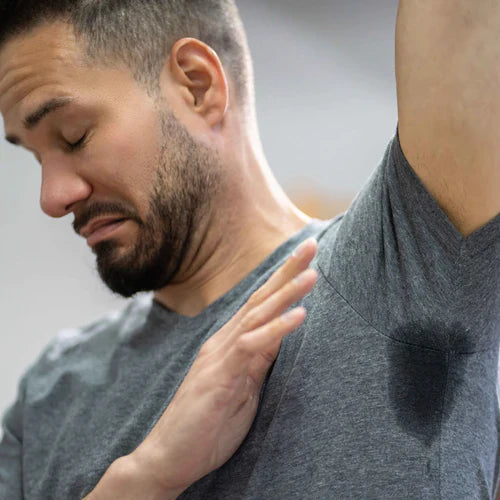
Sweating is a vital process that serves to regulate the body's temperature. It protects us from overheating and makes a significant contribution to keeping our body temperature constant. Because: When sweat evaporates, heat is withdrawn from the body and a cooling effect occurs.
So sweating is something like our very own, natural air conditioning system. But what happens when the air conditioning is running at full speed even though our body doesn't need to cool down at all? In Germany, about 5 million people are affected by excessive sweating. You sweat far more than is necessary for actual heat regulation.
When is sweating considered excessive?
Sweat patches under the arms or beads of perspiration on the forehead – excessive sweating can present itself in many different ways. It may affect the whole body or only certain areas such as the feet, back or face. It is difficult to determine exactly when sweating becomes truly excessive, as the transition between normal and excessive perspiration is gradual.
The human body has around three million sweat glands. Depending on physical exertion, fitness level and outside temperature, these glands can produce between 0.5 and 3 litres of sweat per hour. For example, well-trained athletes tend to sweat more quickly and more intensely than untrained individuals, so during a strenuous training session they can easily produce up to three litres of sweat. In contrast, excessive sweating is generally said to occur when the body produces a large amount of sweat continuously without physical exertion and at normal ambient temperatures. In such cases, the affected areas of the body are difficult or almost impossible to keep dry. Many sufferers report troublesome sweat patches under the arms or beads of sweat on the forehead even shortly after their morning wash. They tend to sweat constantly from getting up until going to bed and are unable to control the perspiration with ordinary hygiene measures. The affected skin areas remain continuously damp, and in cases of very heavy sweating, even wet. Even extensive body care, frequent dabbing of sweat, washing hands and applying moisturiser bring little relief, as the sweat becomes visible again just a few minutes after any hygiene measure.
Possible causes
Heavy sweating can initially have very different causes. For reasons that are not yet understood, some people's sweat glands produce more sweat than the body's natural metabolic processes require. Your sweat glands are just plain overactive. While for some of those affected, even minor stimuli, such as slightly warmer temperatures, positive or negative emotions, are sufficient to get the sweating going, other affected people start sweating without such a trigger being present.
When looking for the causes, however, psychological factors and stress often also play an important role. In addition, profuse sweating can be the result of an unhealthy lifestyle. Obesity and lack of exercise can contribute to increased perspiration and have a negative effect on the organism. In this context, fluid intake in particular plays an important role. Those affected should definitely drink enough to compensate for the body's loss of fluids through sweating. A balanced diet and regular exercise also keep the metabolism in balance and thus not only contribute to an improvement in general well-being, but can also support the natural regulation of perspiration.


